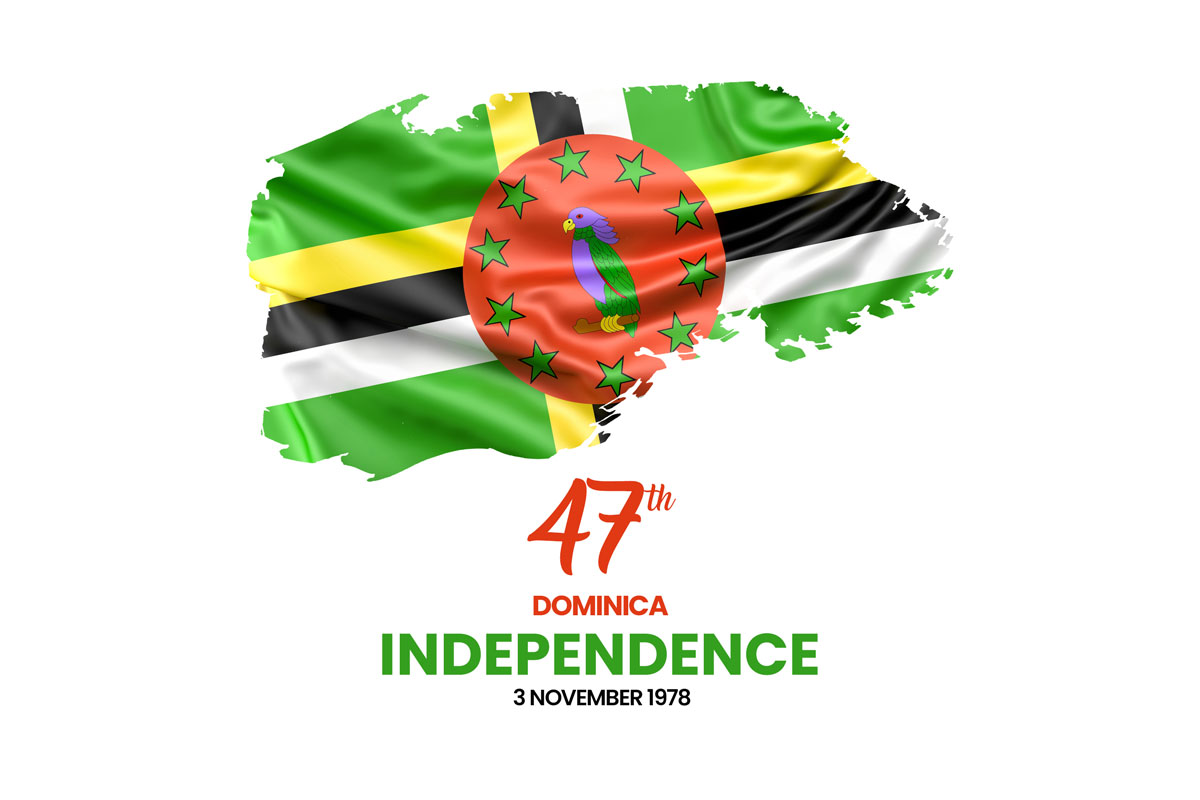

Soca News sends warm wishes to the Nature Island as it celebrates 47 years of independence.
Dominica’s first settlers, the Ortoroids, arrived from South America around 3100 B.C. and lived there until about 400 B.C. They were followed by the Arawaks
around 400 A.D., and later by the Kalinago around 1400. The Kalinago named the island Waitukubuli, meaning “tall is her body.”
Christopher Columbus sighted the island on Sunday, 3 November 1493, and named it Dominica, from the Latin word for Sunday. European powers fought for control for centuries. The Kalinago resisted colonisation but were weakened by wars with the French and British and by new diseases.
The French settled in the late 1600s and brought enslaved Africans to work on plantations. In 1763, after the Seven Years’ War, the island was ceded to Britain, and English became the official language.
Dominica gained independence on 3 November 1978. The country faced early political and economic challenges. Bananas supported the economy until the 1990s, when trade with the UK declined. Today, Dominica focuses on tourism, eco-tourism, and renewable energy.
Independence Season begins in early October and ends on 3 November with the official celebrations. Events such as Heritage Day, Jounen Kwéyòl, the National Day Parade, and the World Creole Music Festival honour Dominica’s journey, freedom, and culture.