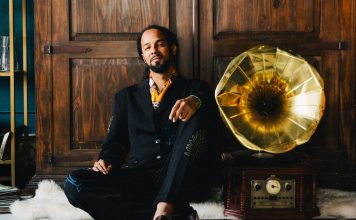
On 2 December, Matthew Phillip, chief executive of Notting Hill Carnival Limited (NHCL), was honoured at the UK Festival Awards, organised by Festival Insights.
Festival Insights said of his work for Notting Hill Carnival: “Today, Matthew is responsible for keeping this cultural beacon alive, so we couldn’t have been prouder to present him with our 2025 Industry Recognition Award.” Phillip’s experience and insights command respect within the festival and event industry.
The media announcement of the award stated: “Notting Hill Carnival started as a meeting of friends and family in the London west end, where communities came together to show solidarity through food, dance and, arguably most importantly, clash over the power of their hand-crafted sound-systems.”
This account gives a slightly misleading impression of the event’s genesis. Notting Hill Carnival’s foundations were laid by the Brixton-based West Indian Gazette’s static indoor shows from January 1959, but the first organised street parade in the area took place in September 1966 as part of the London Free School’s Notting Hill Fayre, a local, multicultural community event. By 1970, the Caribbean element was becoming dominant, but it was only in 1973, when Leslie Palmer invited static sound systems to participate, that the event evolved into its current form. Although Notting Hill and North Kensington are undoubtedly in west London, they cannot be counted as the West End, which specifically describes the area between Covent Garden and Park Lane (eastern boundary of Hyde Park).
Nevertheless, there’s little to argue with in the statement that Notting Hill Carnival “[has] helped birth music genres, builds friendships for life and inspires new generations to look after their neighbours.”